Welcome to the Fold
A post-launch campaign for Cheil USA and Samsung that keeps attention on Galaxy foldables the week a competitor tries to claim the category as new.
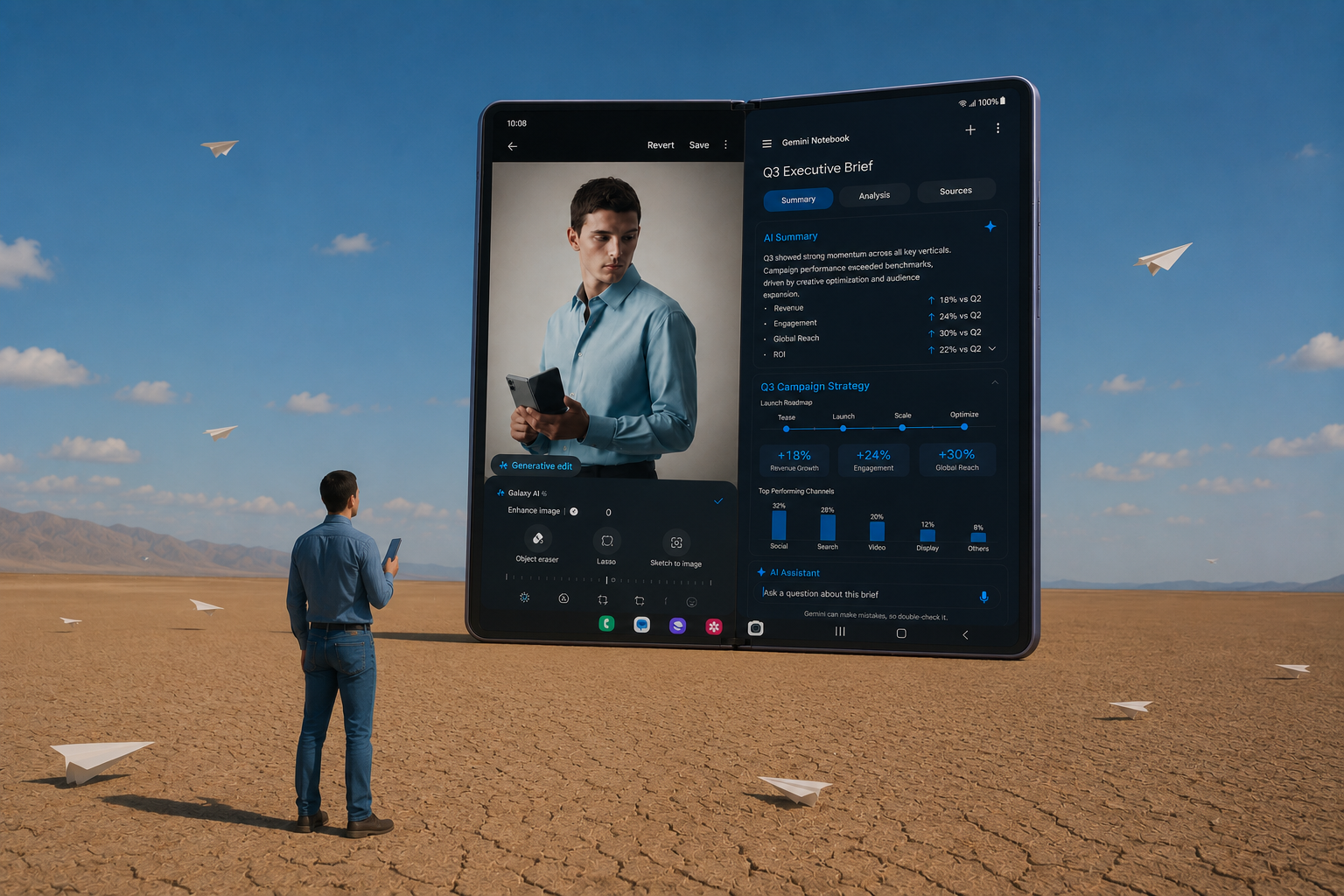
- Role
- Art Director, Design Intern at Cheil USA
- Duration
- 6 weeks, summer 2026
- Team
- 4 interns: strategy, 2 art directors, copywriter
- Tools
- Illustrator, Photoshop, Figma, generative AI
01 The problem
Eight generations of refinement, and people had stopped noticing.
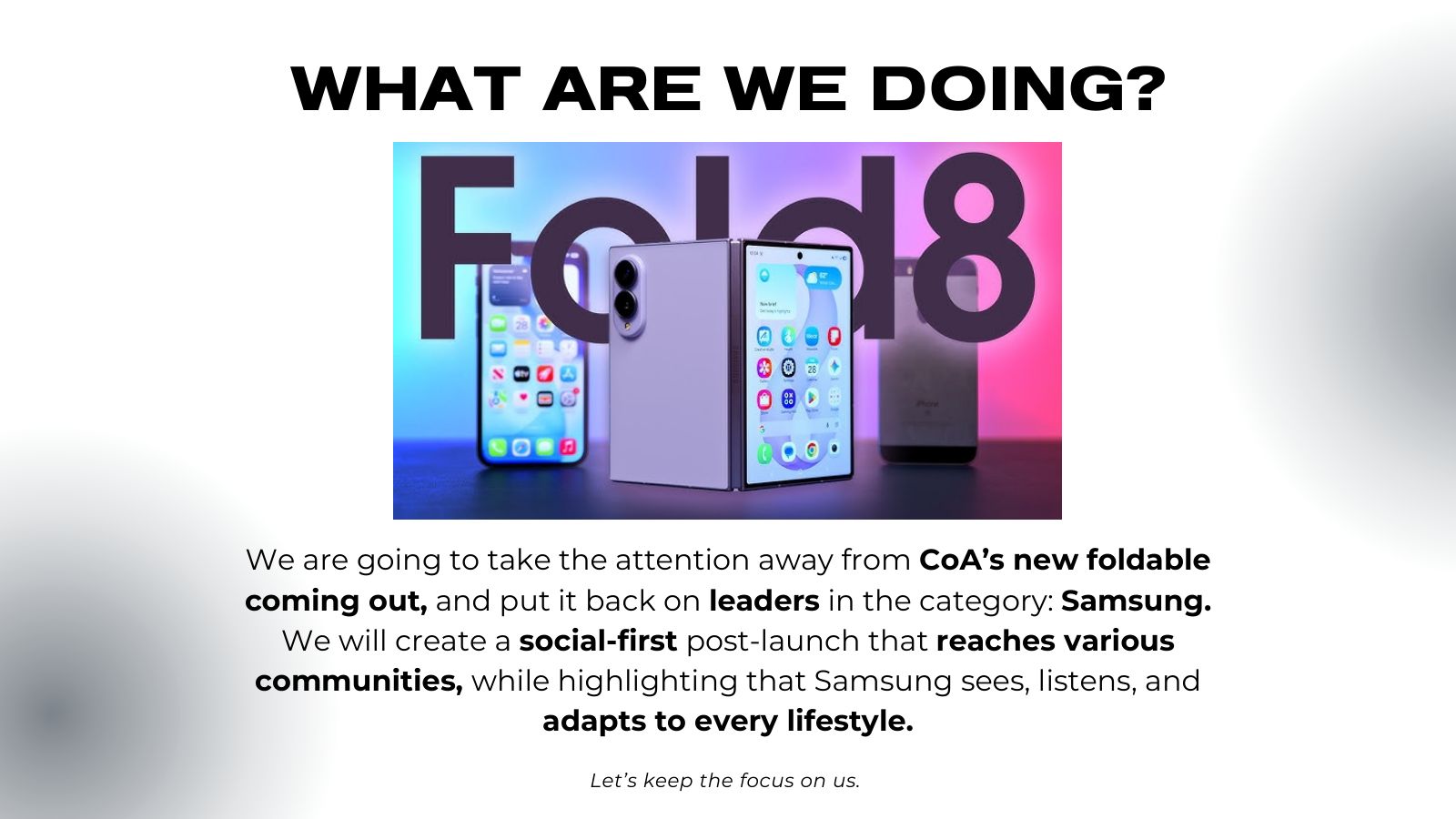
Samsung has been reimagining foldables for eight generations, yet the category felt familiar rather than exciting. A major competitor (code-named CoA in our brief) was about to release its first foldable, and the moment it did, the foldable would become a “new” trending topic for that competitor’s users.
Competing on novelty was a losing argument. The question became how to keep the conversation on the brand that had already perfected the form.
02 Research
Switchers are loyal to a device, not a brand.
Our audience, the One-Man Showmen, are Gen Z and young millennials who balance school or work, a social life, and the hobbies that make them who they are, often on one phone. A survey we ran asked which brand they use and what would make them switch.
The answers pointed away from brand loyalty. Switchers care about functionality (a phone that lasts for the price), features (battery, design, camera), and personality; the phone holds their whole life, so it becomes an extension of them.
Survey: current phone brand
“Mostly, camera quality. If I see another brand is doing better, I could see myself switching.”Survey response: what would make you switch?
“Samsung, because they brought back the flip phone which was really cool and nostalgic… and they had funky colors and different customizations.”Survey response
03 Strategy
Shift the switcher’s gaze from what’s coming to what’s already perfected.
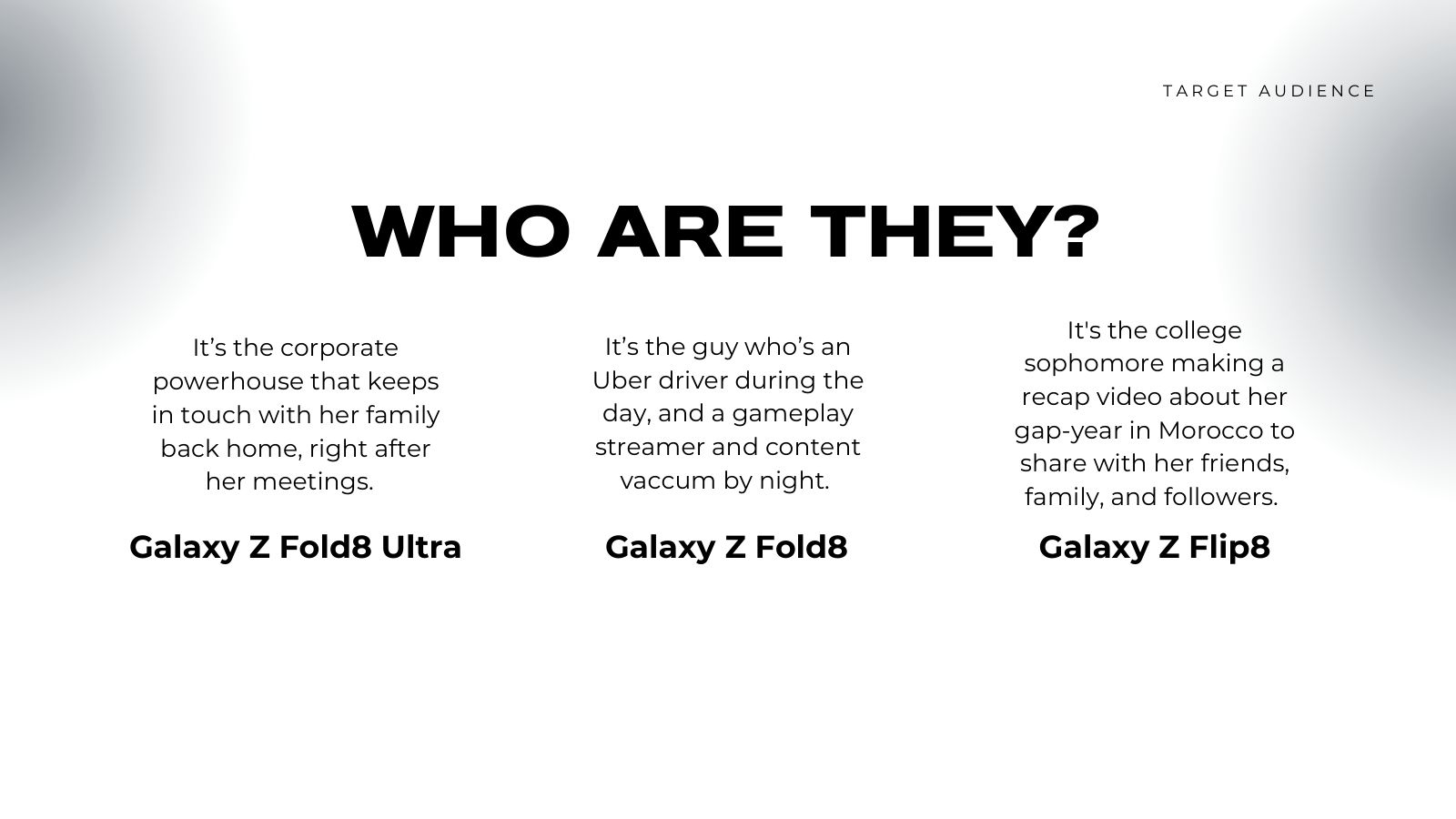
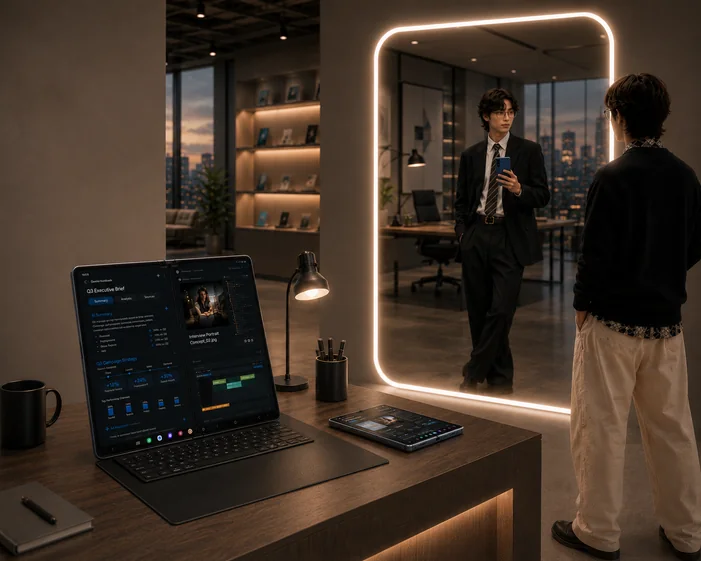
If people bond with a phone’s personality, then each foldable should have one. We matched each device to a real lifestyle: the Fold8 Ultra for the executive who calls family right after meetings, the Fold8 for the rideshare driver who streams games at night, and the Flip8 for the sophomore editing a gap-year recap.
The team developed two campaigns from that idea: Choose Your Galaxy, built on choice and personalization, and Unfold Your Lifestyle, built on leadership.
04 Campaign 1: Choose Your Galaxy
Give each phone a face, so people can pick the one that fits.
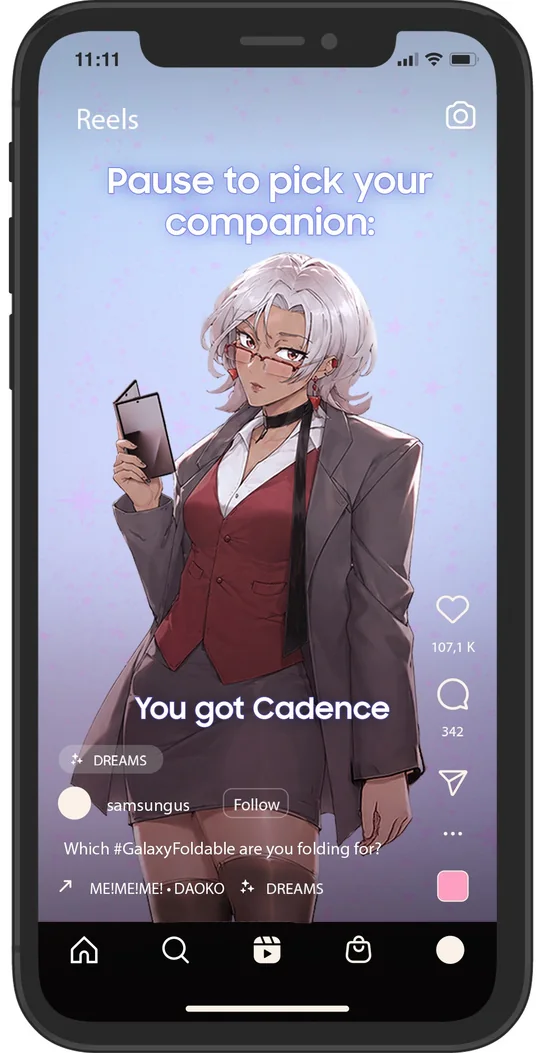
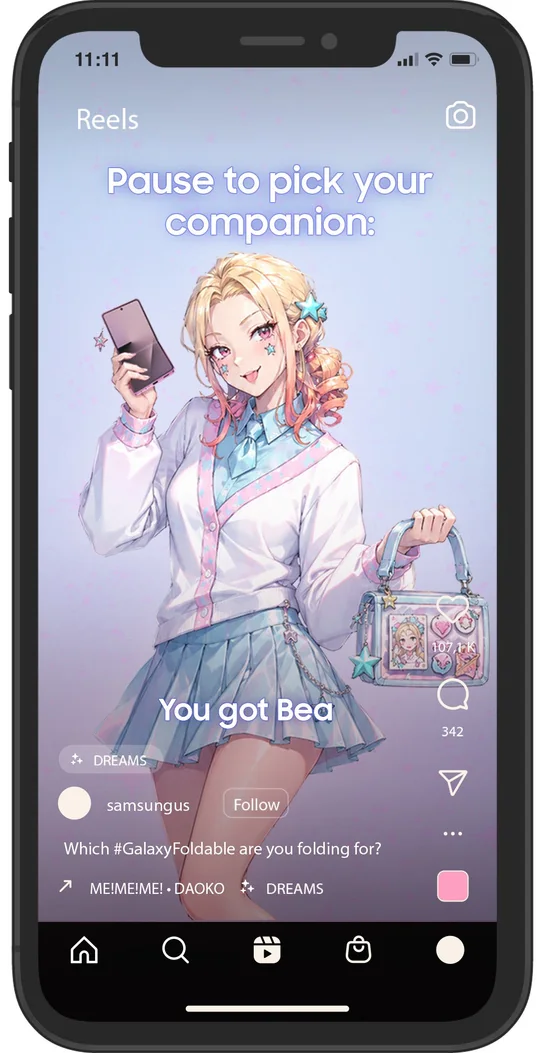
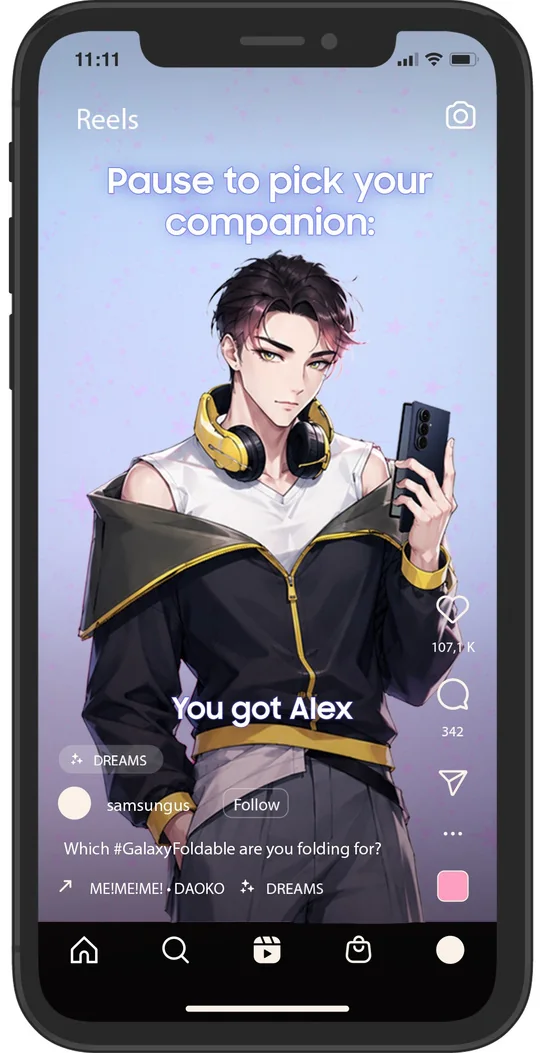
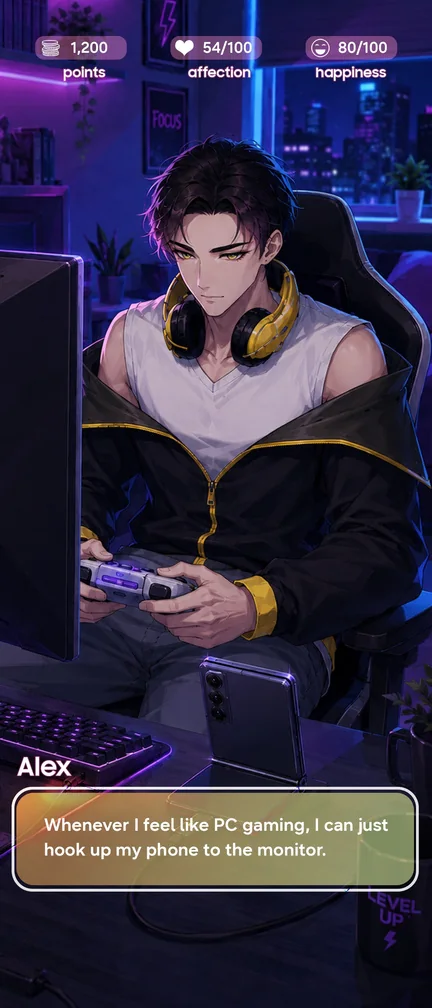
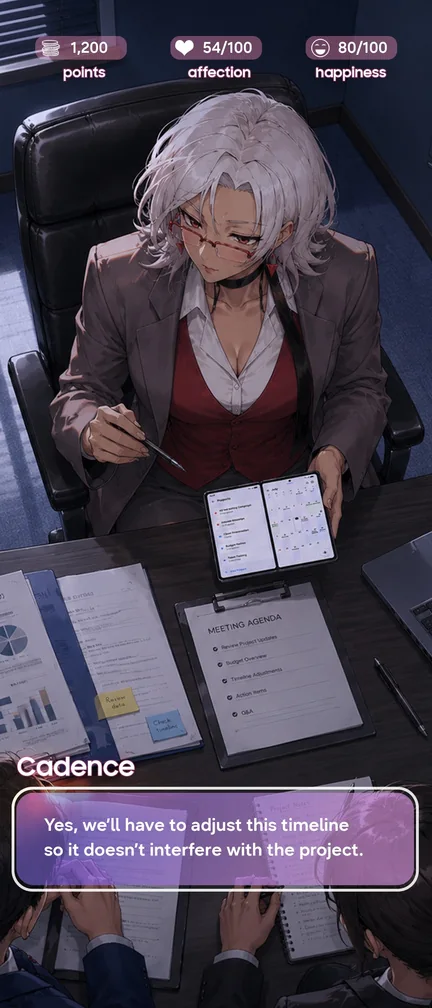
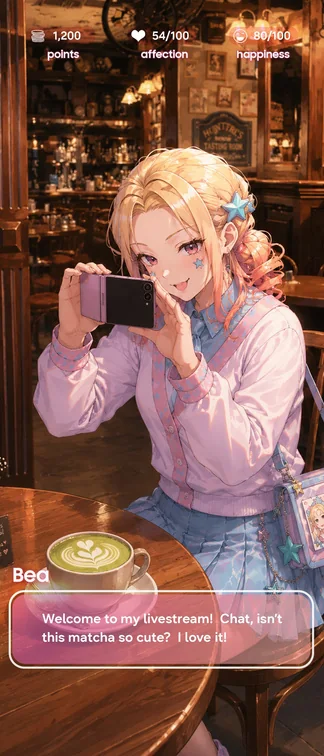
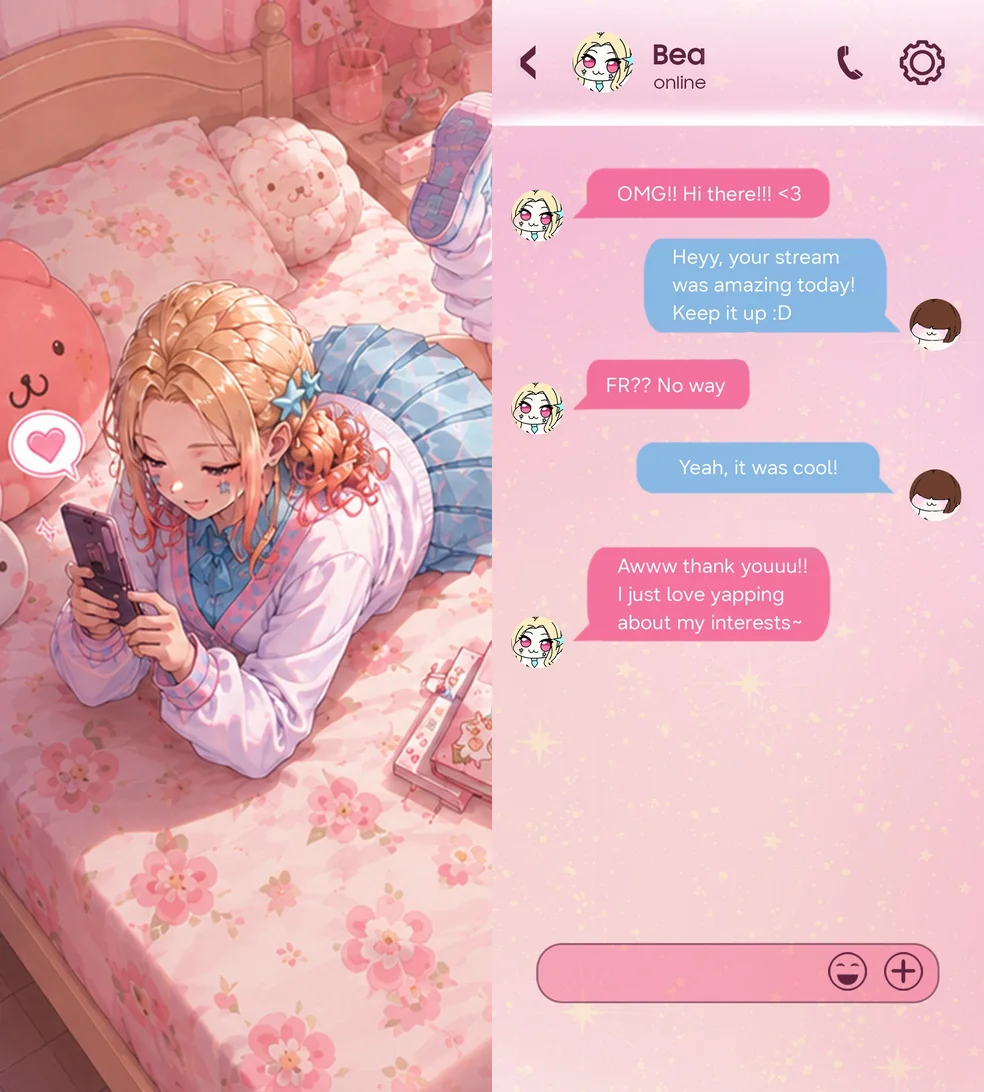
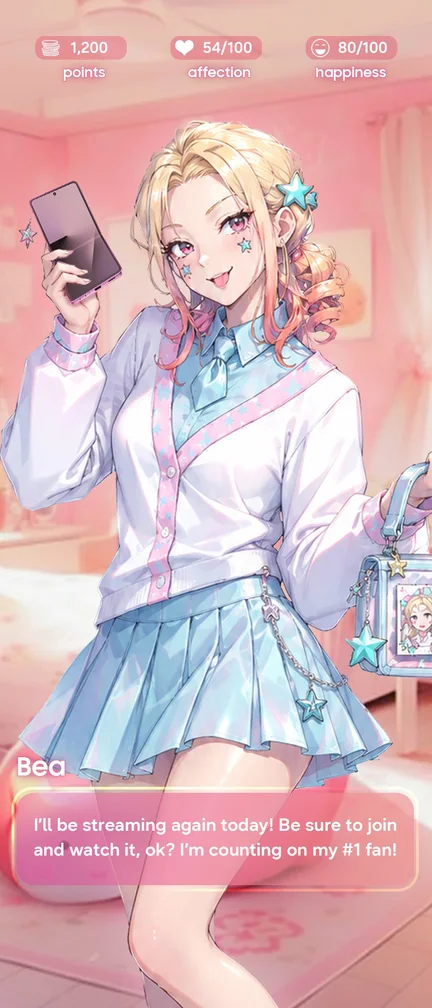
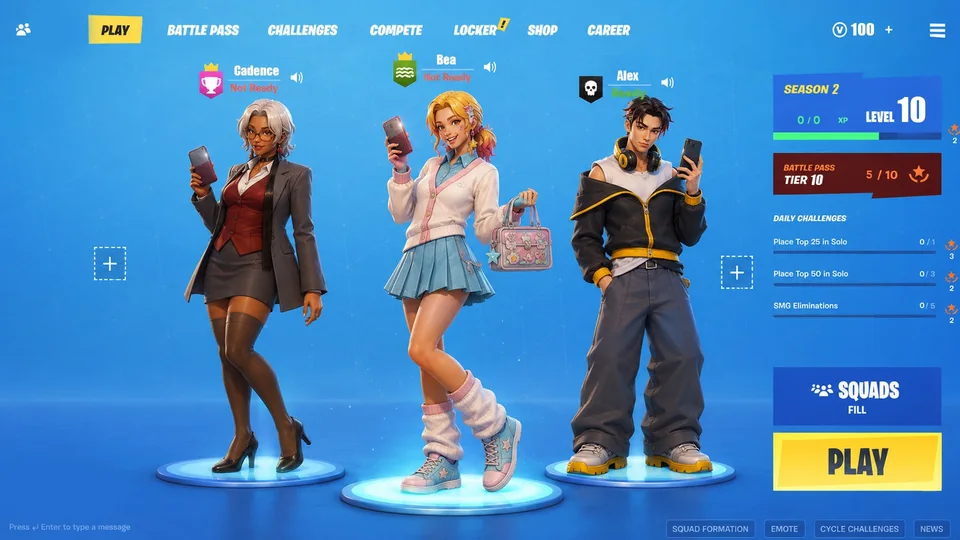
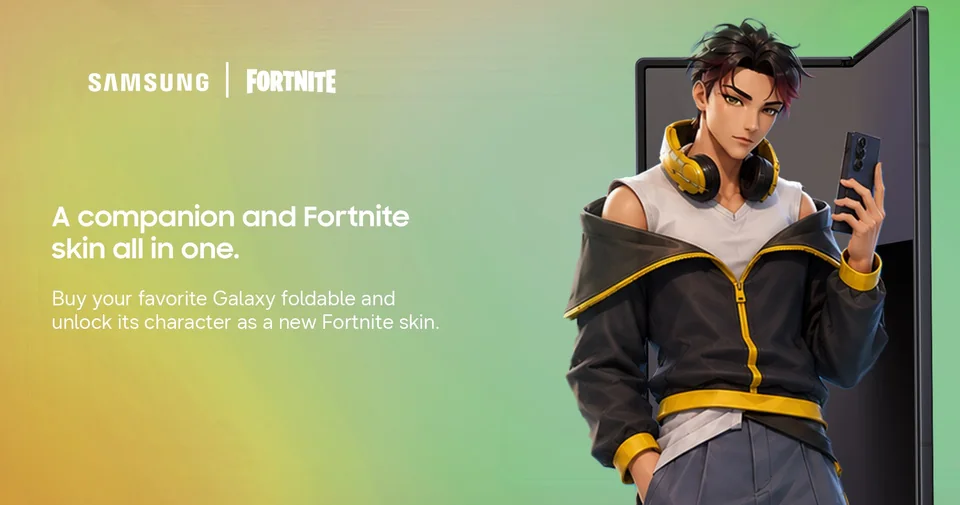
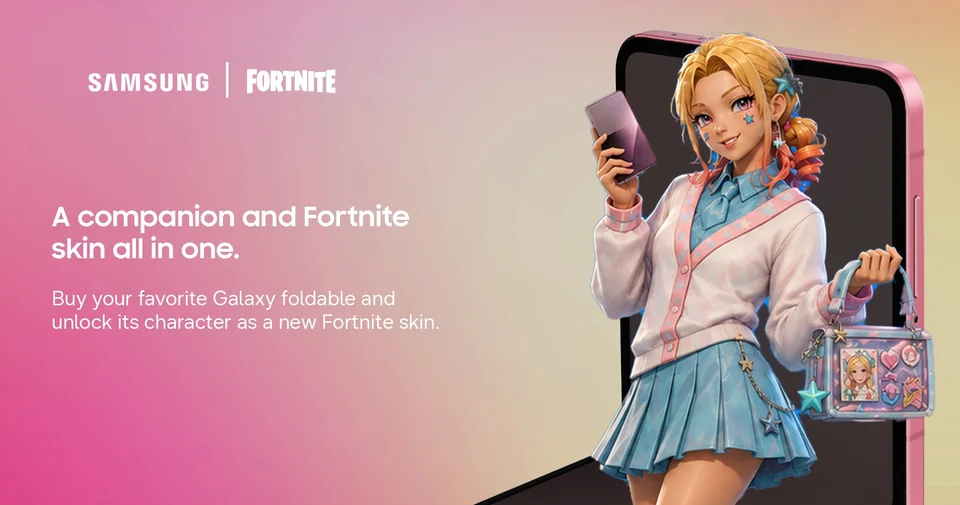
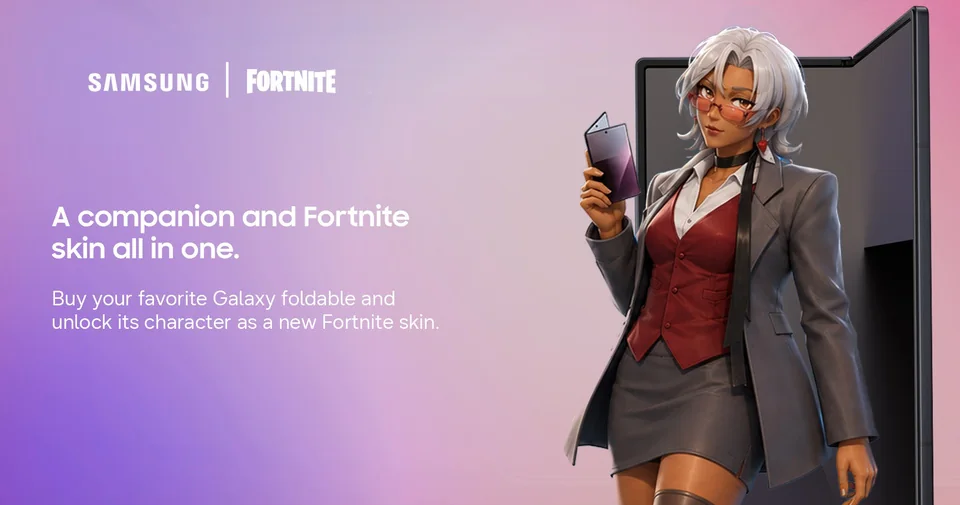
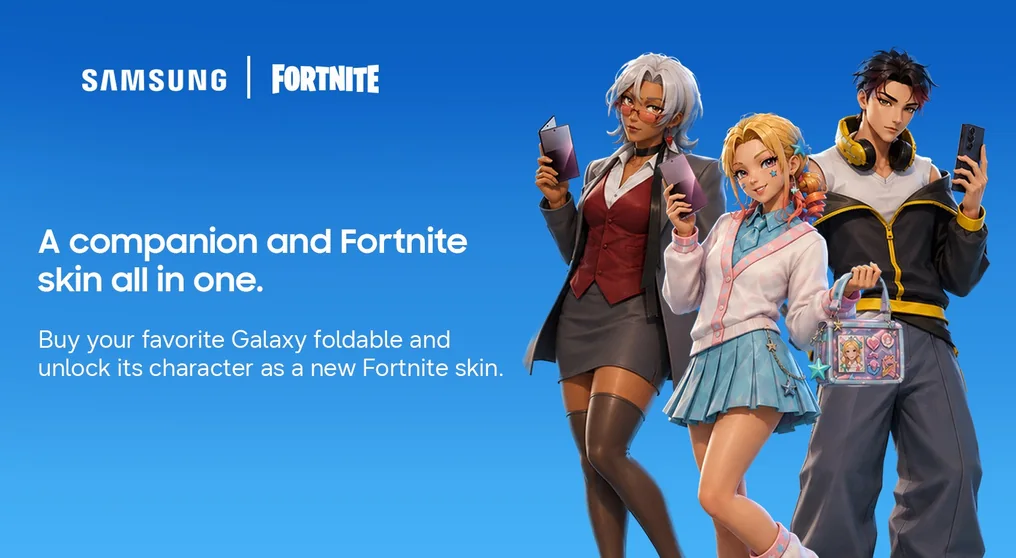
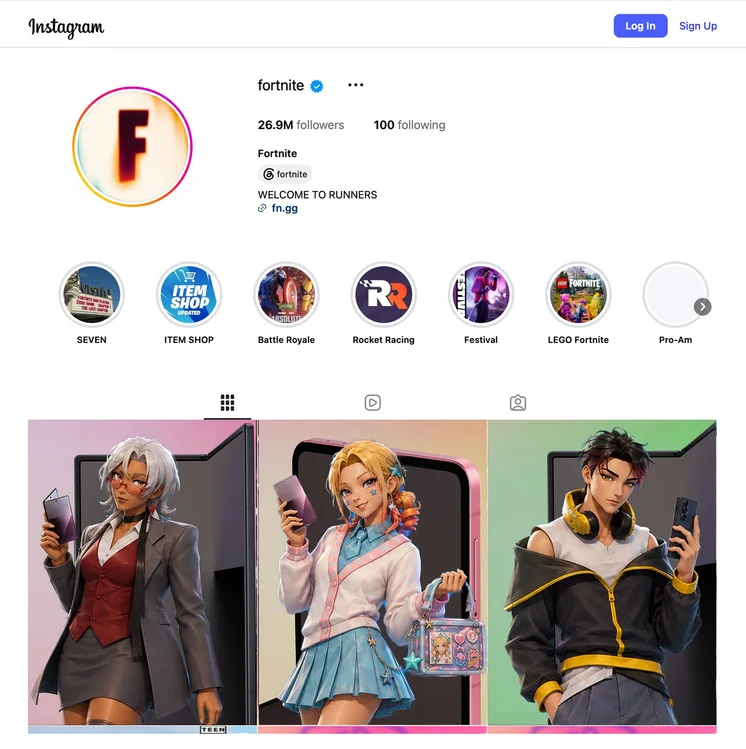
We personified the three devices as the Celestials. Cadence (Z Fold8 Ultra) is a strict tech CEO who is secretly disorganized. Alex (Z Fold8) is a gamer who docks his Fold into a desktop with DeX. Bea (Z Flip8) is a fashion creator whose Flip matches her outfits and fits her smallest purse.
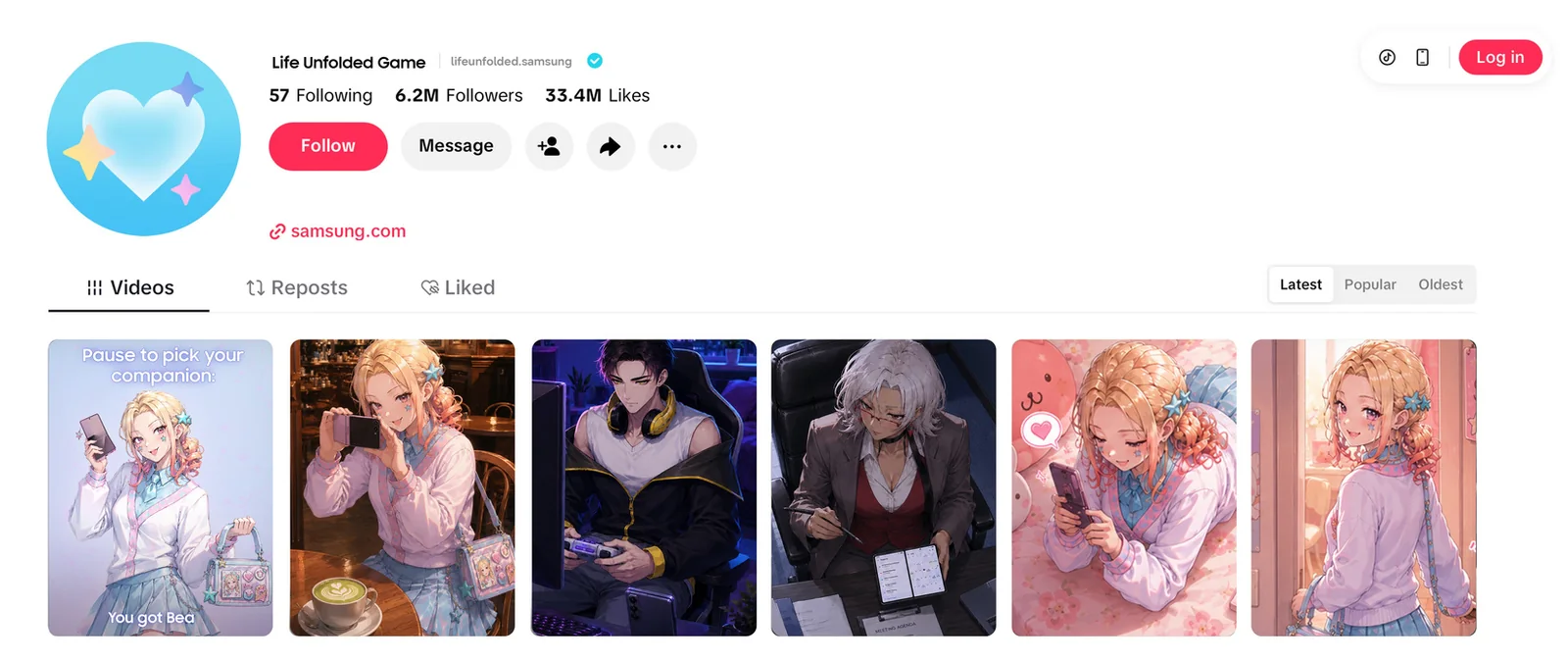
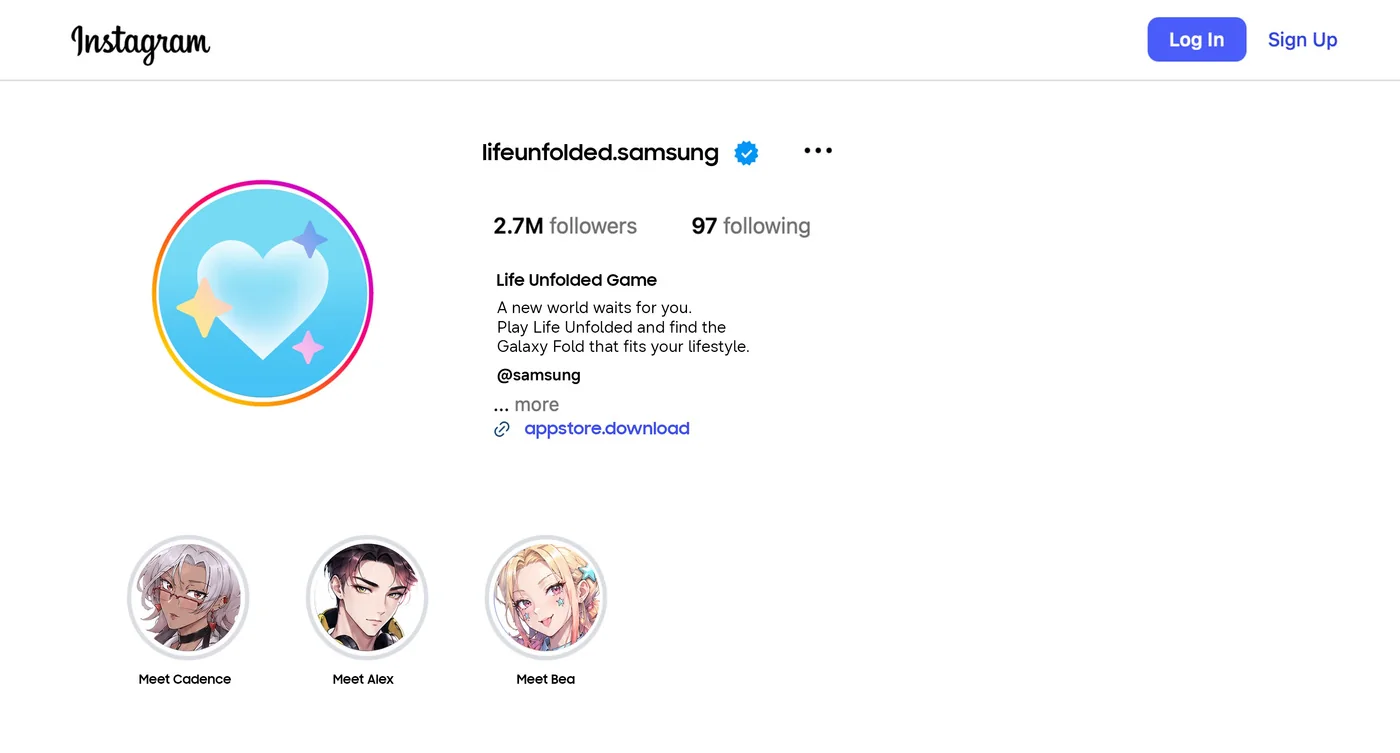
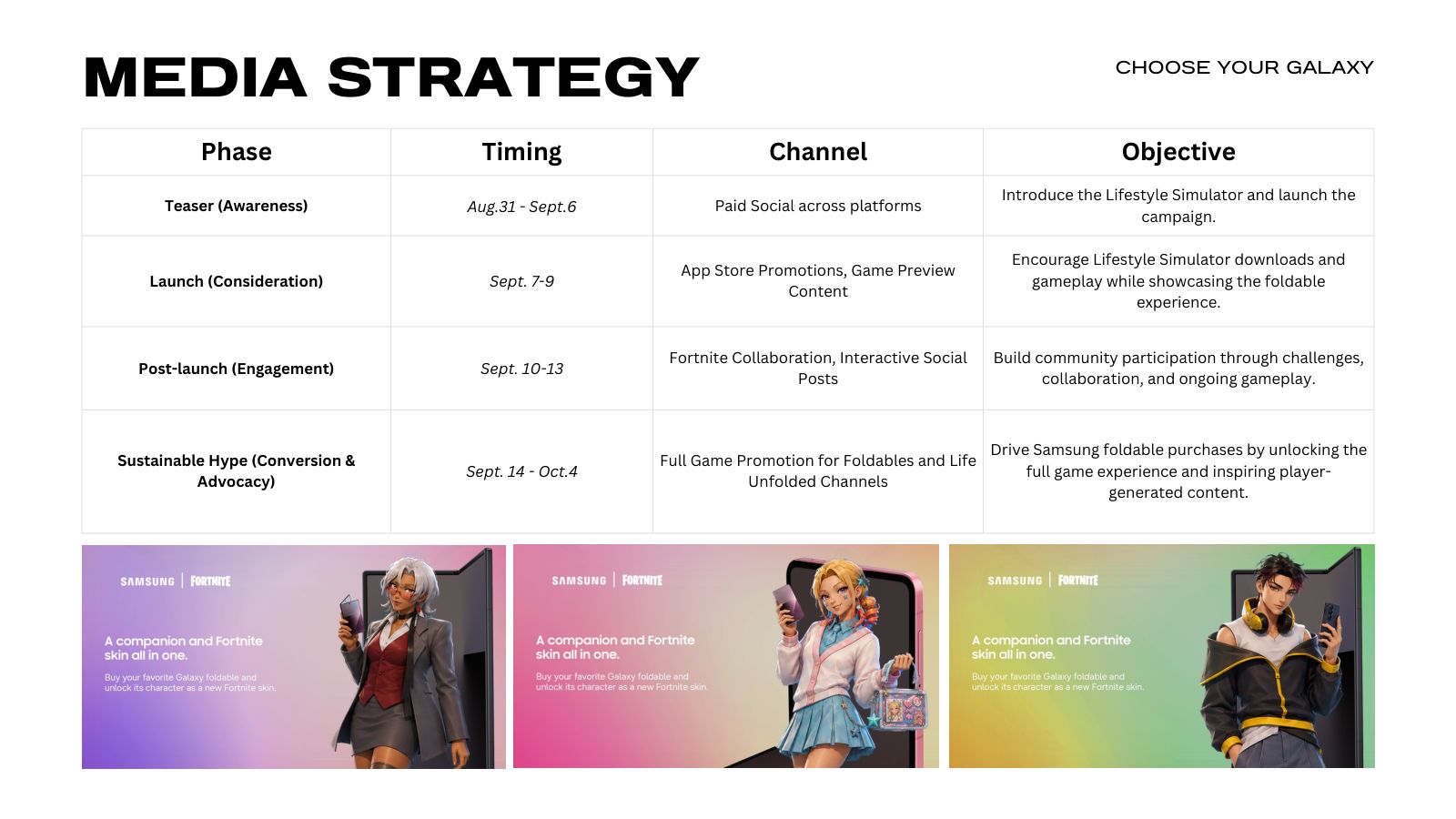
Most people meet a new phone on social media first, so the characters debuted as interactive reels on TikTok, Instagram, YouTube, and X: pause the reel and you land on the companion that fits you. A separate Life Unfolded account carries gameplay previews and collaboration news.



05 Life Unfolded app
Advertising that behaves like a product.
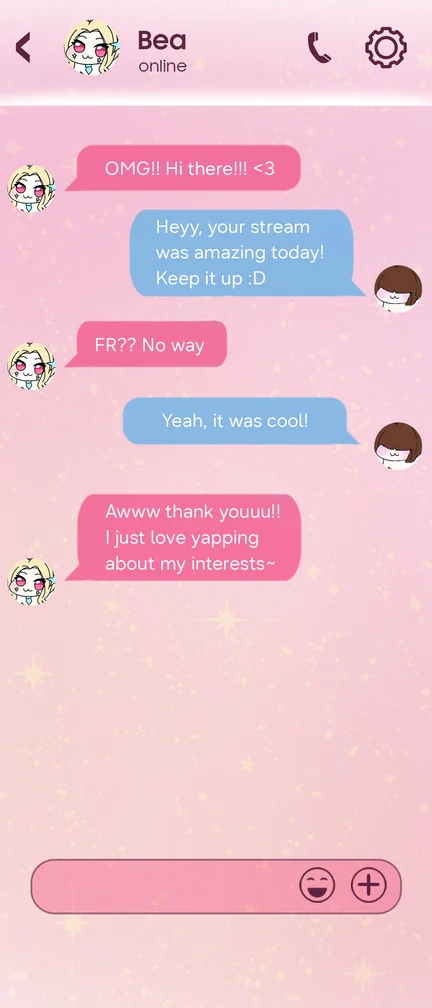
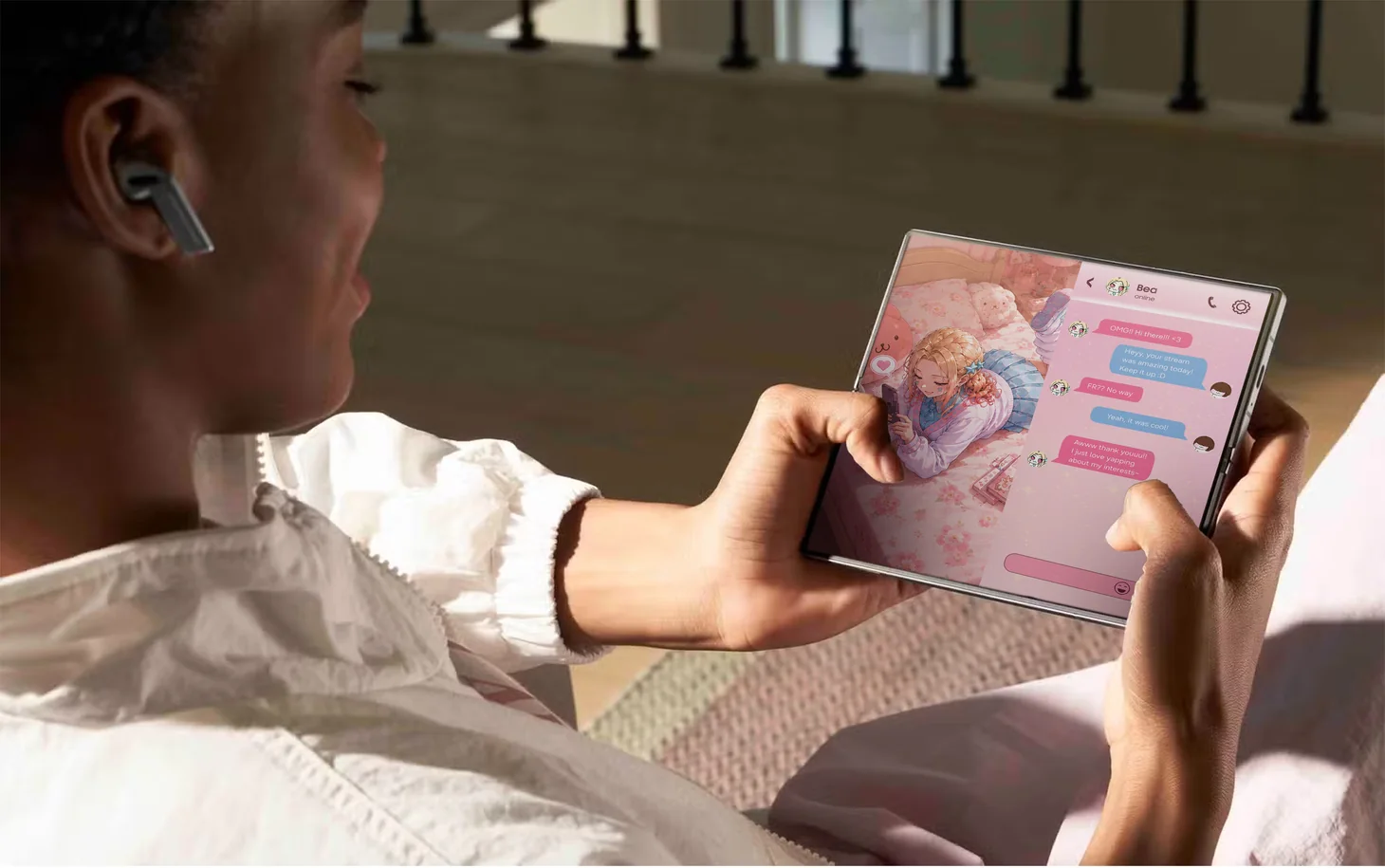
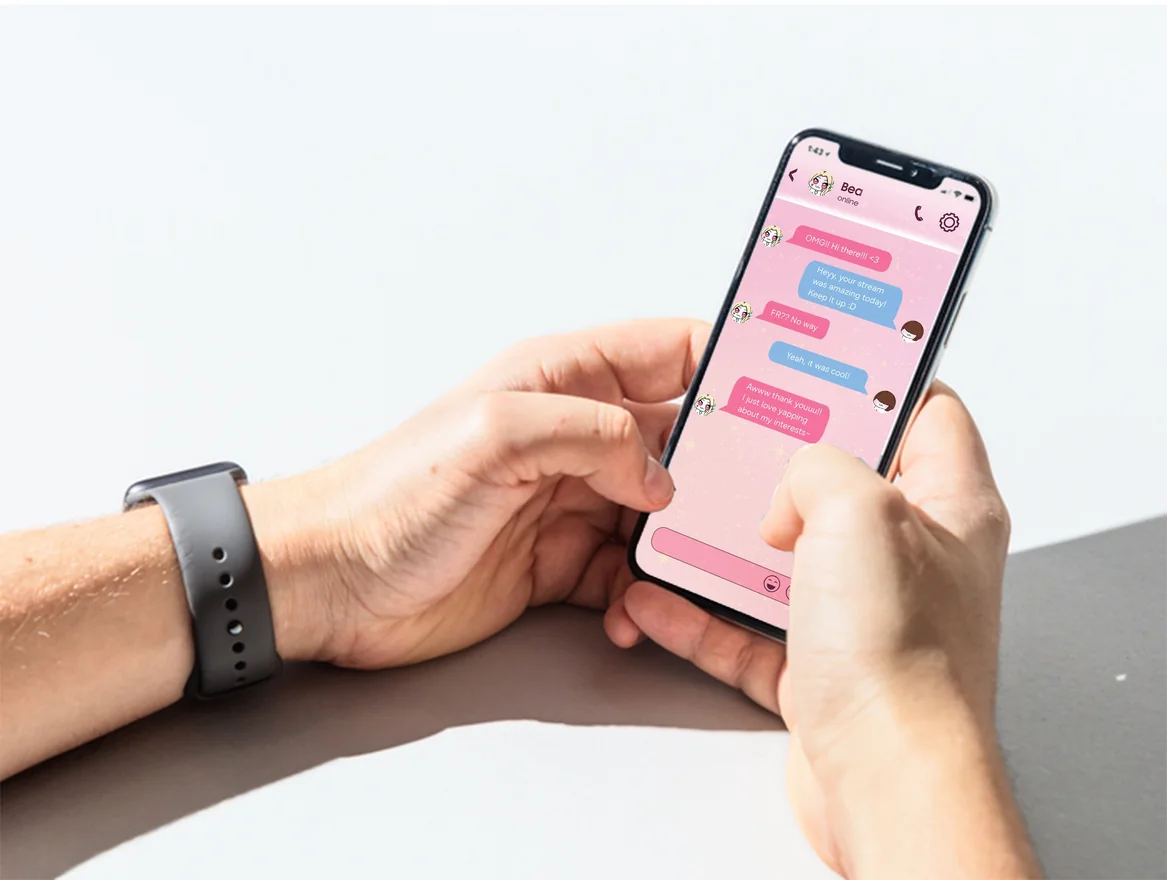
The centerpiece is Life Unfolded, a lifestyle simulator where users text each character and live through everyday scenarios that show off Galaxy AI: Cadence rescheduling a meeting, Alex hooking his phone to a monitor, Bea going live from a café. Points, affection, and happiness meters keep people coming back.
Cutscenes show each phone doing what only its form can do. A free demo runs on any phone, but the ending and the rewards unlock only on Galaxy Z devices; the fear of missing out does the selling.


06 Fortnite collaboration
Meet gamers where they already are.
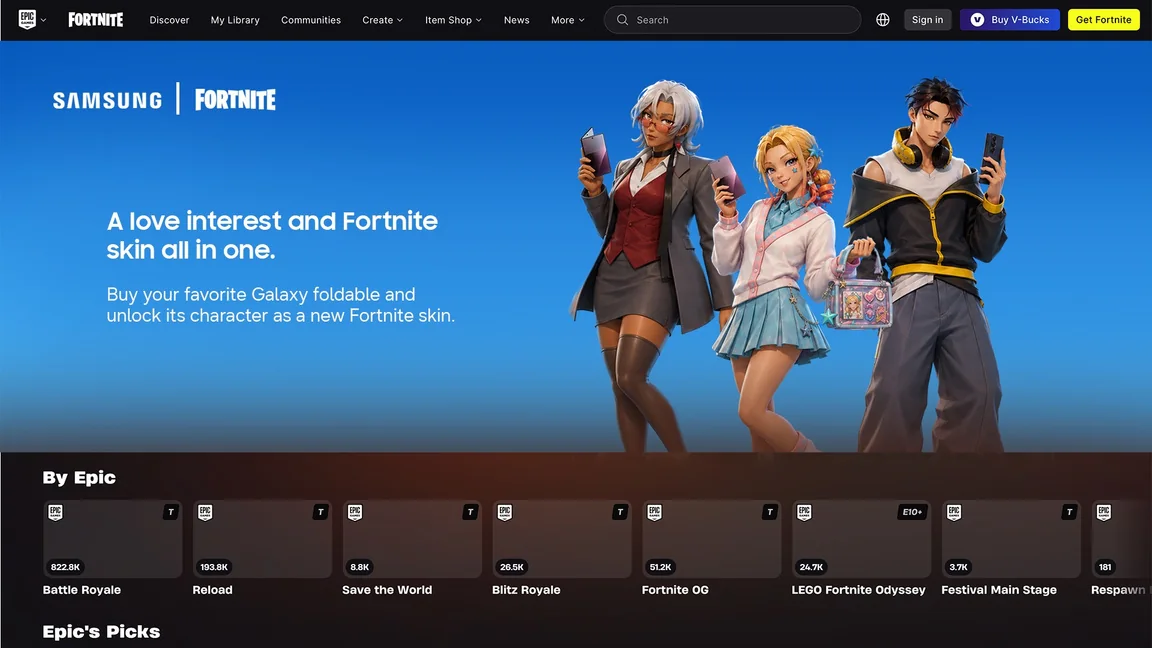
Buying a Galaxy foldable unlocks that device’s character as a playable Fortnite skin, with emotes and cosmetics to match. The collaboration carries the campaign past the tech crowd and into a community Samsung has been trying to reach, and players without the skins feel exactly the curiosity we wanted.




07 Campaign 2: Unfold Your Lifestyle
Leadership, shown without shouting.
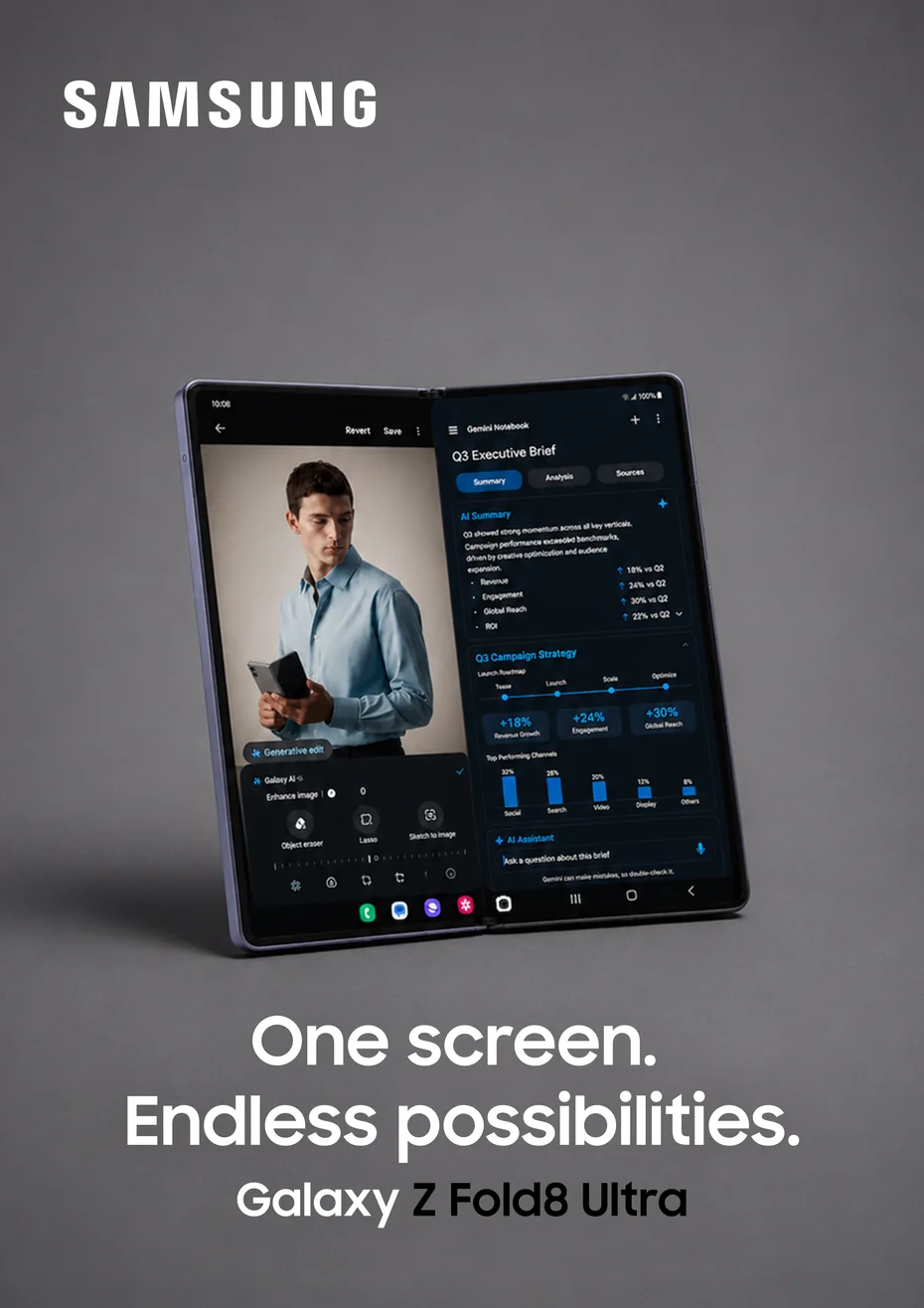
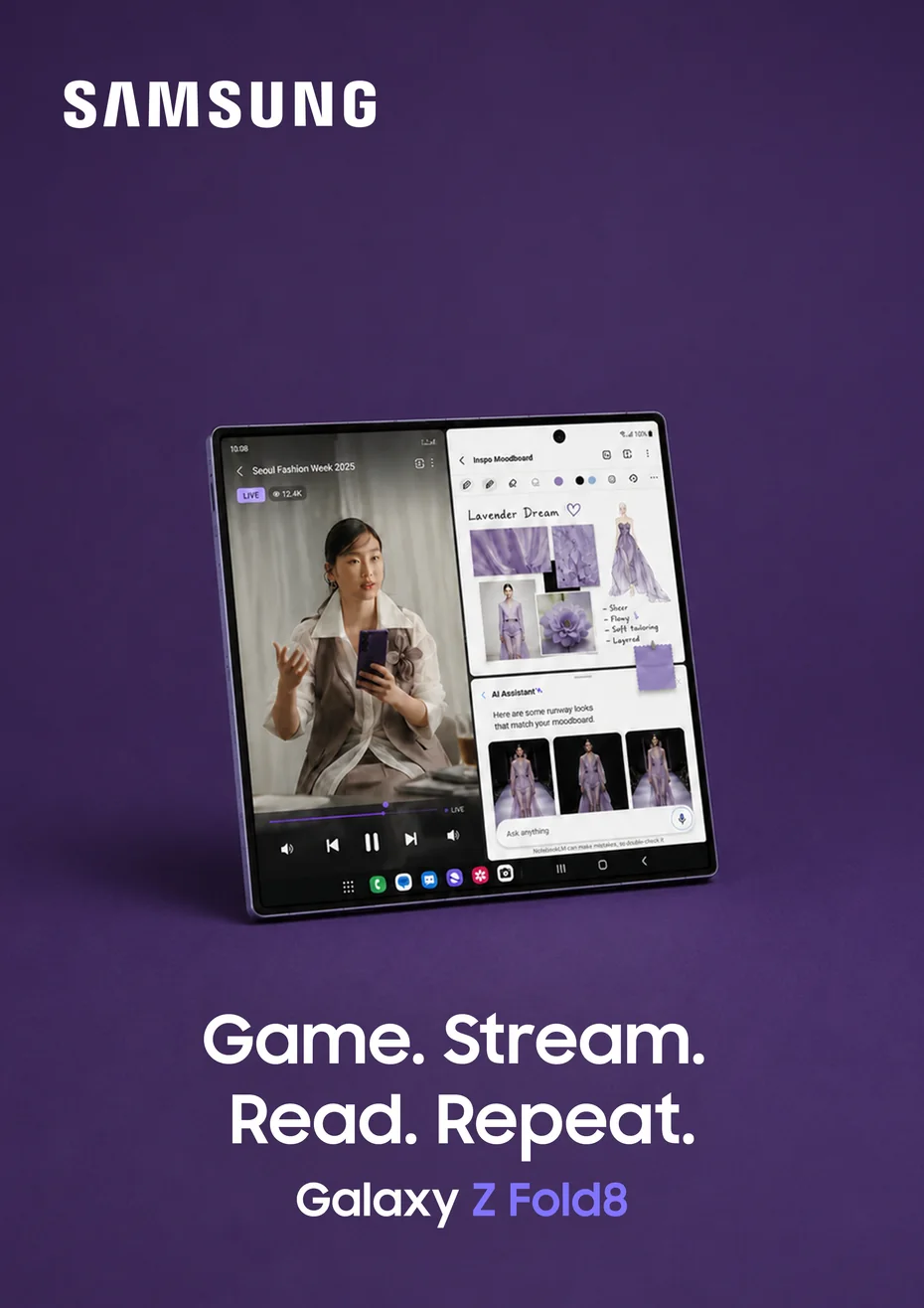
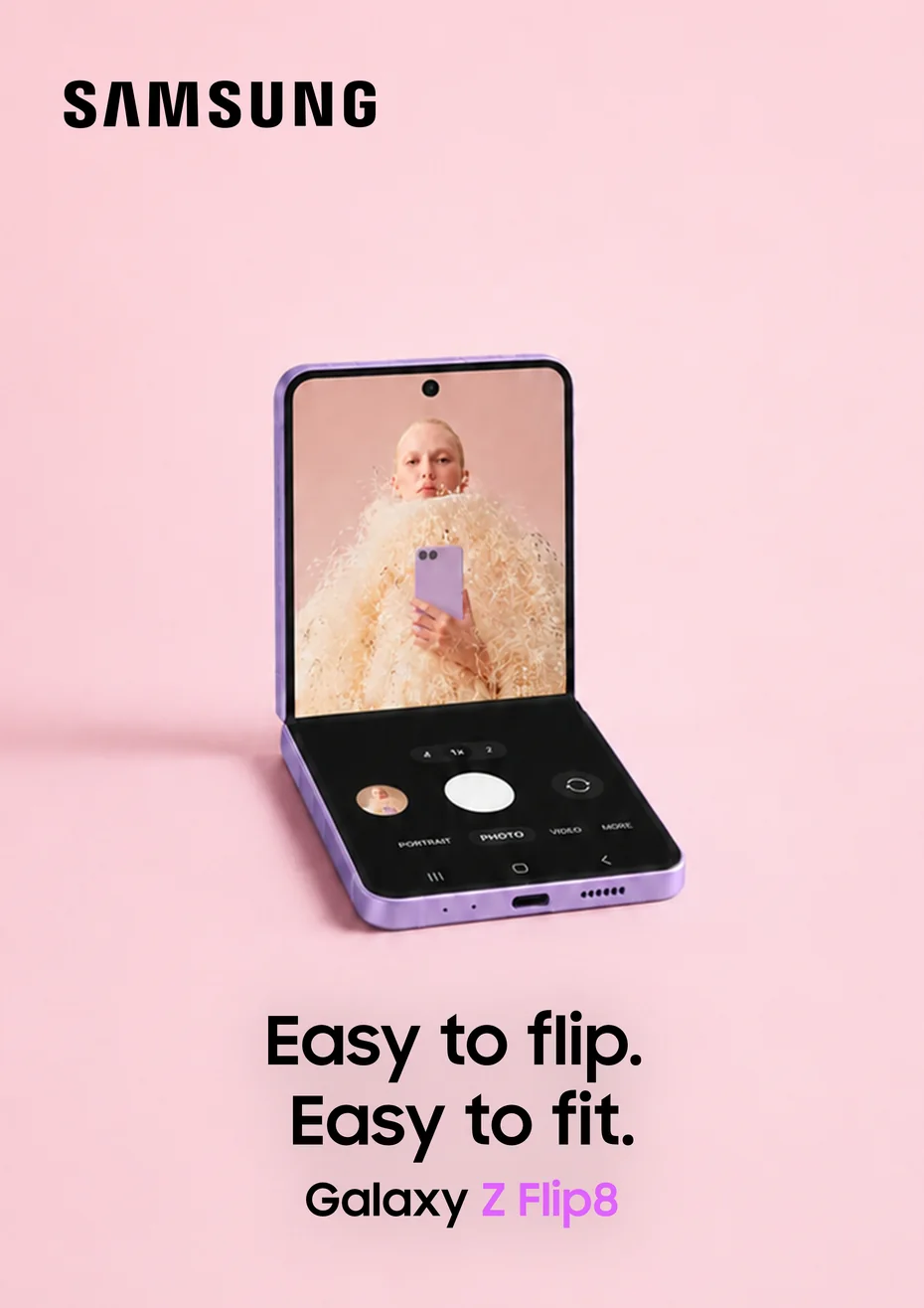
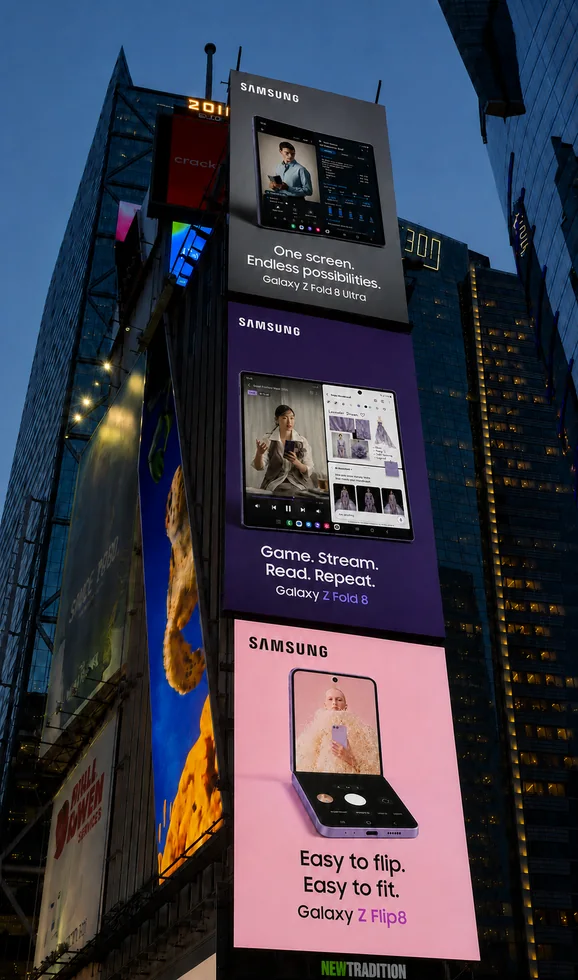
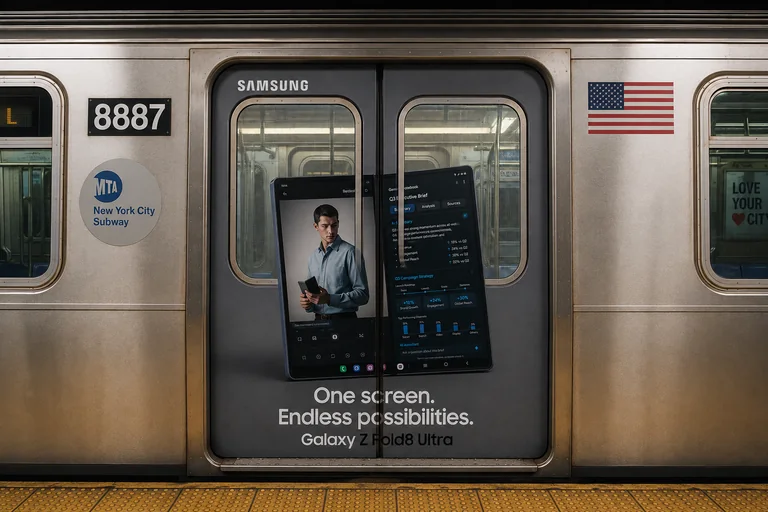
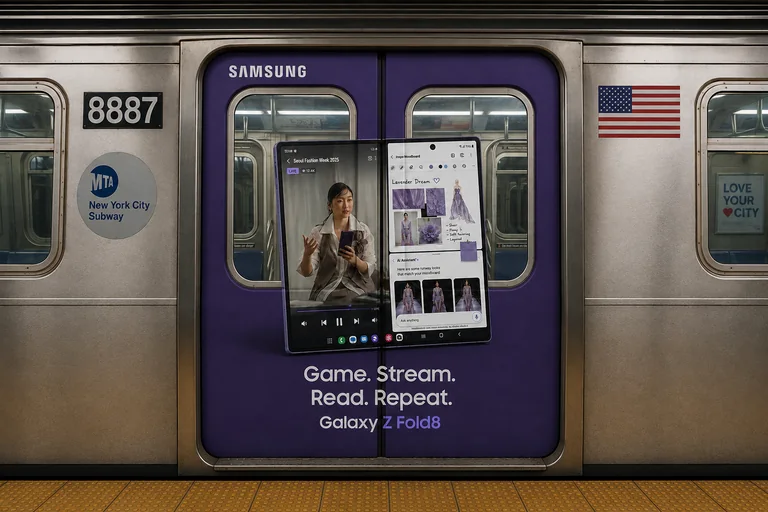
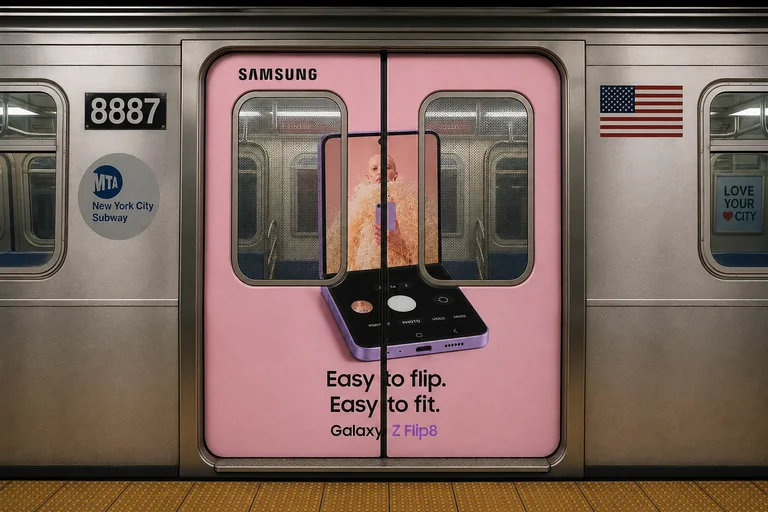
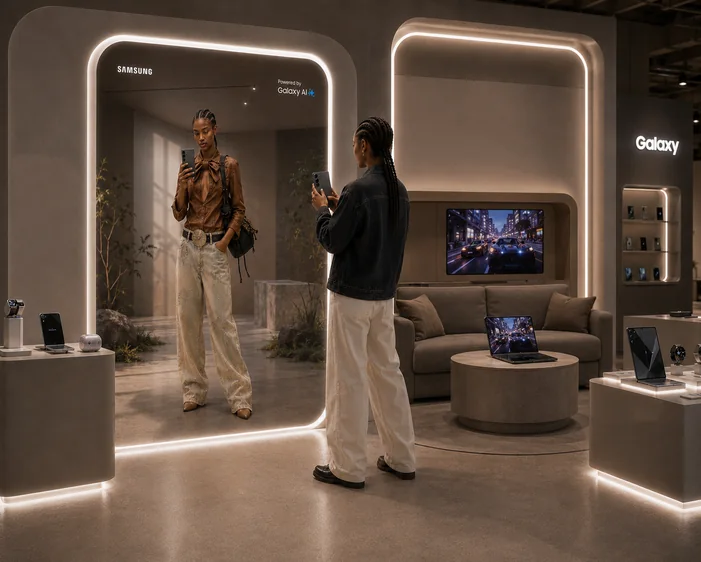
The second campaign pairs each device with someone who is number one in their field (Michael B. Jordan, Alex Consani, and Suni Lee) and meets people where they already are. Key visuals give each phone one line: One screen. Endless possibilities. Game. Stream. Read. Repeat. Easy to flip. Easy to fit.
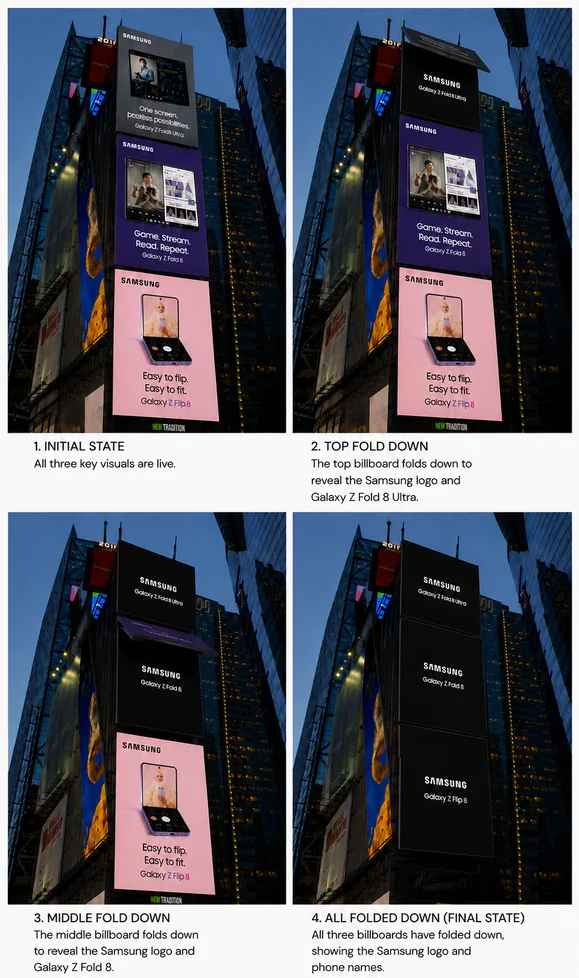
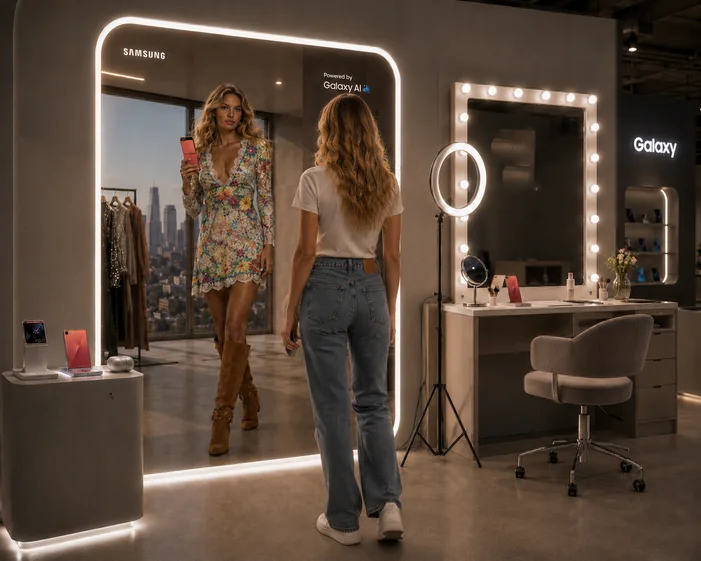
In Times Square, three digital billboards fold forward on a top hinge like the phone closing. On the N/Q/R/W lines, subway doors split into two screens, one for creating and one for multitasking. A traveling pop-up lets visitors step into the Galaxy lifestyle instead of being told about it.
08 Film spots
Three folds, three phones.
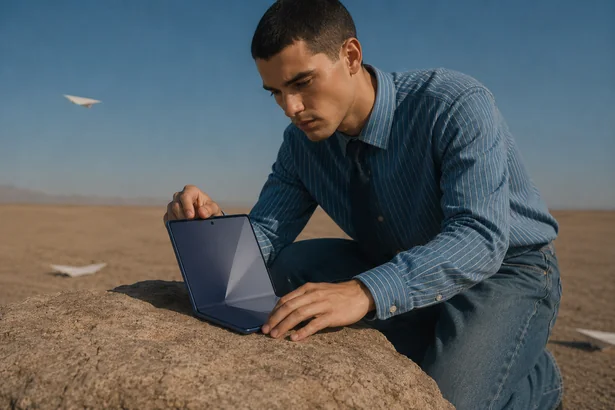
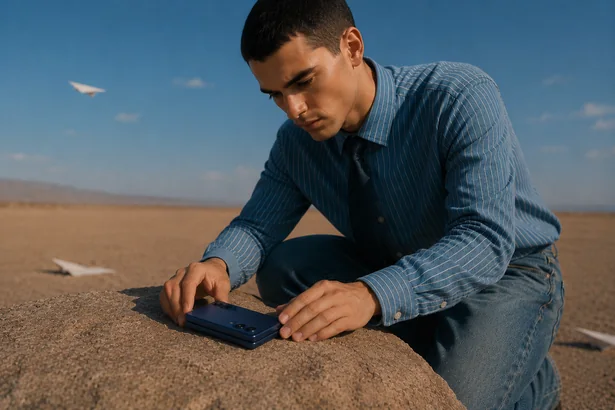
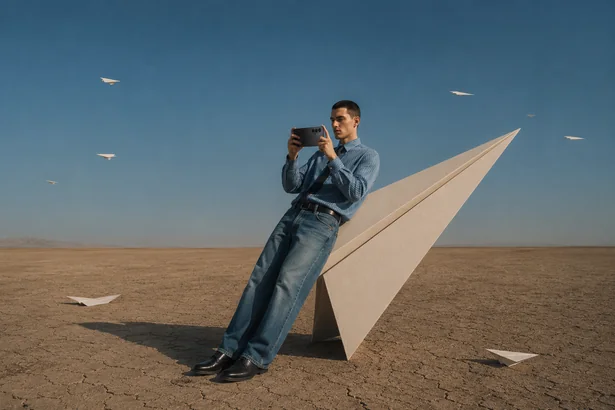
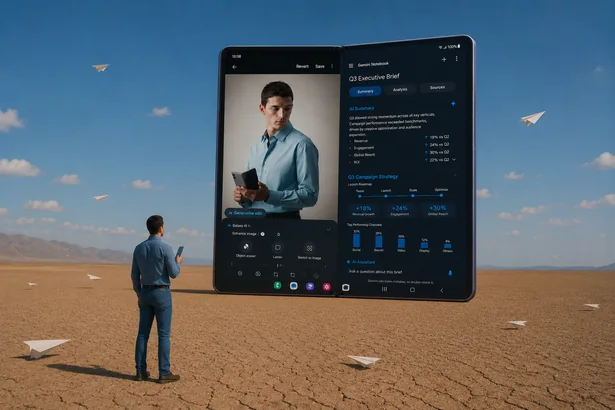
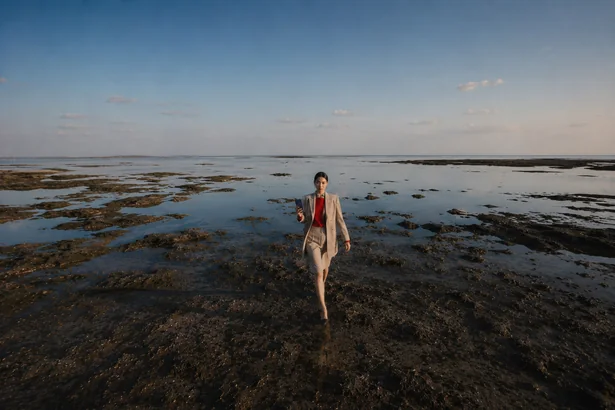
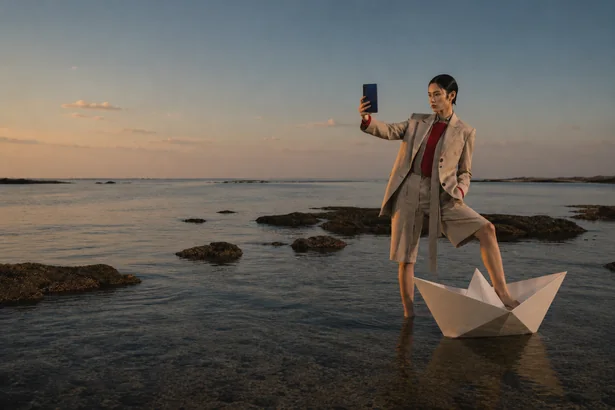
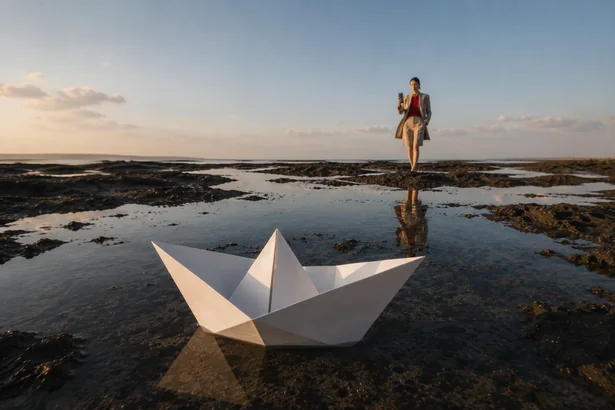
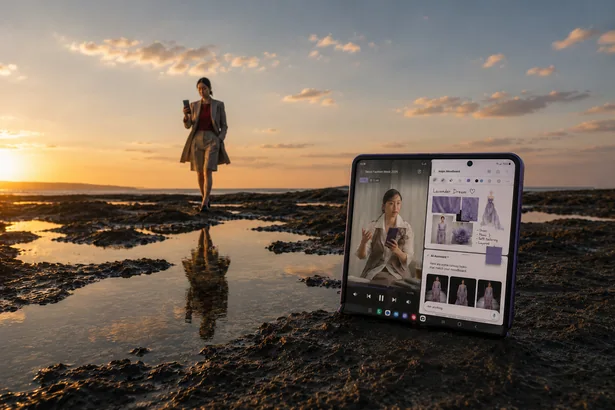
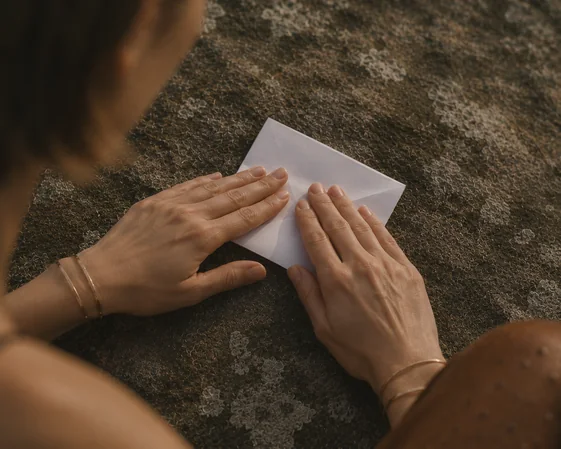
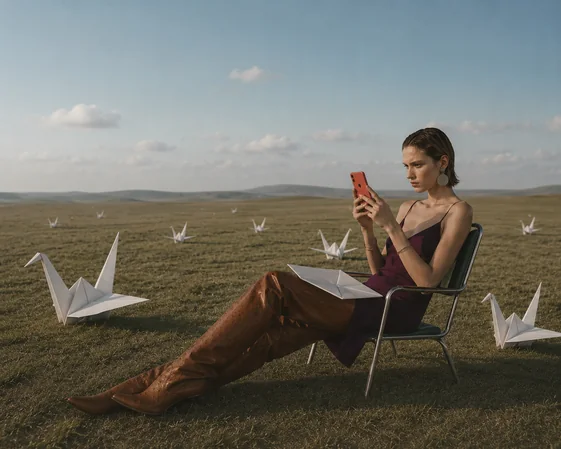
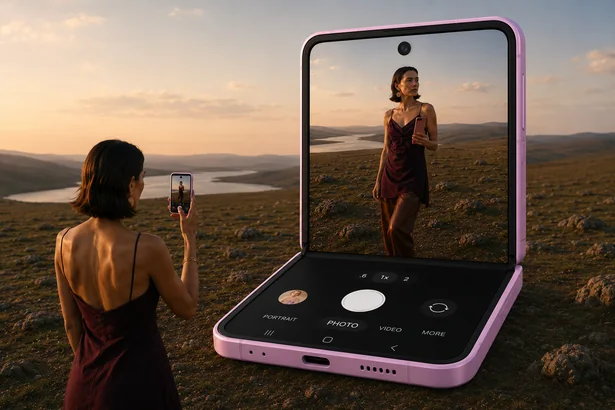
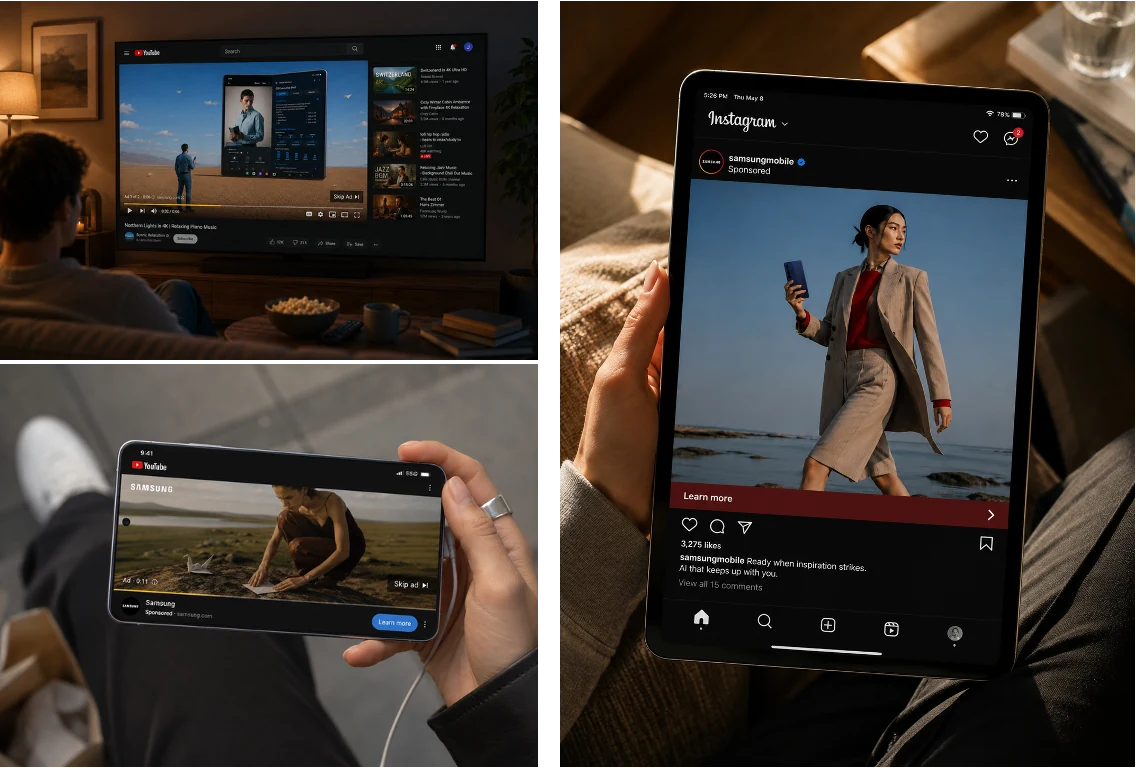
Three spots use Korean paper folding, jong-i jupgi, as the metaphor. In Paper Plane, the camera pulls back to reveal a giant Fold8 Ultra, scaled to the size of its ambition. In Paper Boat, each fold mirrors the Fold8’s transforming design. In Paper Cranes, the moment a crane is finished is the moment an idea forms, right before the Flip8 captures it.
The spots run in-feed on YouTube and Instagram during the competitor’s first two launch weeks, so Galaxy appears right next to their ads at peak consideration.
Spot 1 · Paper Plane · Z Fold8 Ultra


Spot 2 · Paper Boat · Z Fold8


Spot 3 · Paper Cranes · Z Flip8



09 Results
Two client-approved concepts, from twelve deliverables in three days.
For Samsung’s first round of creative review, I art directed four campaign concepts totaling twelve deliverables in a three-day turnaround. They were refined into the two client-approved concepts above, built around gaming and fashion culture. Each shipped with a phased media plan and a $1.3M out-of-pocket budget, timed to run alongside the competitor’s first two launch weeks, when purchase consideration peaks.
10 Takeaway
Where it succeeds: the switcher who is loyal to a device, not a brand.
If switchers choose the phone that fits their life, the strongest thing a campaign can do is let them feel that fit before they buy. That is why the simulator app matters most to me: it turns features into experiences someone can try, and it gives the competitor’s launch week a louder, more personal alternative. For Samsung, success looks like attention held during the one window when it is most at risk. For me, this was the project where campaign thinking and experience design became the same job.
For the audience
A phone they can match to their life, through characters and scenarios instead of spec sheets.
For Samsung
Leadership reinforced at the exact moment a competitor claims the category is new.
What I learned
Personas aren’t only a research artifact. Here they became the product.